

Transformation plans rarely stall because leaders lack ambition. They stall when delivery goals become overlapping position descriptions or a team that’s difficult to hire. In digital transformation recruitment australia, the starting point is not a list of vacancies; it’s a clear view of the outcomes the organisation needs to deliver and the capabilities required to achieve them.
It’s understandable that hiring feels complex. Microsoft programmes can require a blend of functional, technical and change capability, while role requirements may blur together. The right balance of permanent employees and contractors also depends on the work ahead, the skills already in the organisation and how delivery will progress.
This article explains how to translate transformation goals into practical roles and team structures, choose an engagement model that fits delivery needs, and use market intelligence to make more informed hiring decisions. saas nine brings recruitment partnership and talent advisory together to connect business strategy with Microsoft capability, helping Australian organisations build teams with delivery in view.
Key Takeaways
- Start digital transformation recruitment australia with the outcomes you need to deliver, then map the workstreams and capabilities required.
- Turn broad position descriptions into complementary roles with clear accountabilities and measures of delivery.
- Match permanent recruitment, contract hiring, talent augmentation or executive search to the programme’s need for continuity, specialist expertise or leadership.
- Connect workforce planning and role design with technology choices to build capability that supports the transformation beyond hiring.
Why digital transformation recruitment in Australia starts with the delivery challenge
Transformation starts with a business need, not a job title. Organisations may be modernising legacy platforms, seeking more useful insights from data or considering how to adopt AI responsibly. Each change calls for people who can turn technology choices into practical outcomes. A useful definition is: digital transformation recruitment aligns workforce capability with technology choices and measurable business objectives. That keeps digital transformation recruitment australia focused on delivery rather than a collection of isolated vacancies. For a broader overview of the concept, see What is Digital Transformation?
Which business problems should the transformation team solve?
Begin by identifying the operational or customer outcome the programme is intended to support. For example, a business aiming to improve management reporting may need to clarify its data foundations, reporting processes and decision-making needs before defining roles around a particular platform. Separate the outcome from the preferred tool, then identify the work and capabilities required. This helps distinguish essential expertise from assumptions that can unnecessarily narrow a role brief.
Make the goal specific enough to guide decisions: what needs to work better, for whom, and how will progress be assessed? The answer might shape requirements for process analysis, data architecture, change leadership or Microsoft platform expertise. The Microsoft talent approach can support organisations seeking capability aligned with their technology and delivery needs.
Why recruitment can be only one part of the response
A skills gap may be visible, but it isn’t always the only constraint. Unclear decision rights, overlapping responsibilities or gaps in programme governance can leave even capable specialists unable to move work forward. Before recruiting, clarify who owns key decisions, where roles connect and how teams will measure delivery. These answers make role design more realistic and help candidates understand the contribution expected of them.
Recruitment strengthens the capacity to deliver; it doesn’t replace a sound strategy or active executive sponsorship. Leaders still need to set priorities, resolve trade-offs and maintain accountability for business outcomes. Treat hiring as one part of that operating model, and the team is more likely to have both the capability and direction required to make change useful.
How to translate transformation goals into roles and team capability
Turn the business goal into a hiring plan through a clear chain: outcomes, workstreams, capabilities, roles, accountabilities and delivery measures. For instance, an ERP programme may aim to improve financial visibility. Its workstreams could include process design, data migration and platform delivery, each requiring different expertise and clear ownership. This practical sequence keeps digital transformation recruitment australia anchored to delivery priorities, rather than a wish list of skills or technology keywords.
Capability maps should follow transformation priorities, not job titles. Start with the work that must be done, then define the contribution and boundaries of each role. This is also the logic behind saas nine’s Microsoft technology recruitment services, which connect specialist capability with programme needs.
Build a team around workstreams, not an oversized wish list
Broad position descriptions often combine architecture, delivery, governance and adoption in one unrealistic brief. Separate those responsibilities, then decide which need dedicated ownership and which can sit within existing teams. A delivery lead may coordinate dependencies; a solution architect shapes the design; business-facing specialists connect processes with platform decisions. The right mix depends on the programme, not an assumption that one person can cover every discipline.
Connect Microsoft capability to the programme
Technology choices shape the specialist profile, but should follow the work. Dynamics 365 ERP may call for functional and technical capability across business processes and implementation; Customer Engagement brings different CRM and adoption needs. Power Platform may support workflow or application requirements, while Fabric points to data engineering, architecture and analytics capability. Azure and Copilot initiatives also require role expectations suited to their specific scope, integration and responsible use.
For each role, specify the work, decision rights, essential experience and evidence of progress. BCG’s Digital Transformation in Corporate Australia provides a local perspective on transformation challenges. Use market insight to test whether each brief reflects available capability, then refine it before hiring. If the priorities are still taking shape, saas nine’s workforce and capability advisory can help connect the programme plan to a practical team structure.
Choose a recruitment model that fits the transformation programme
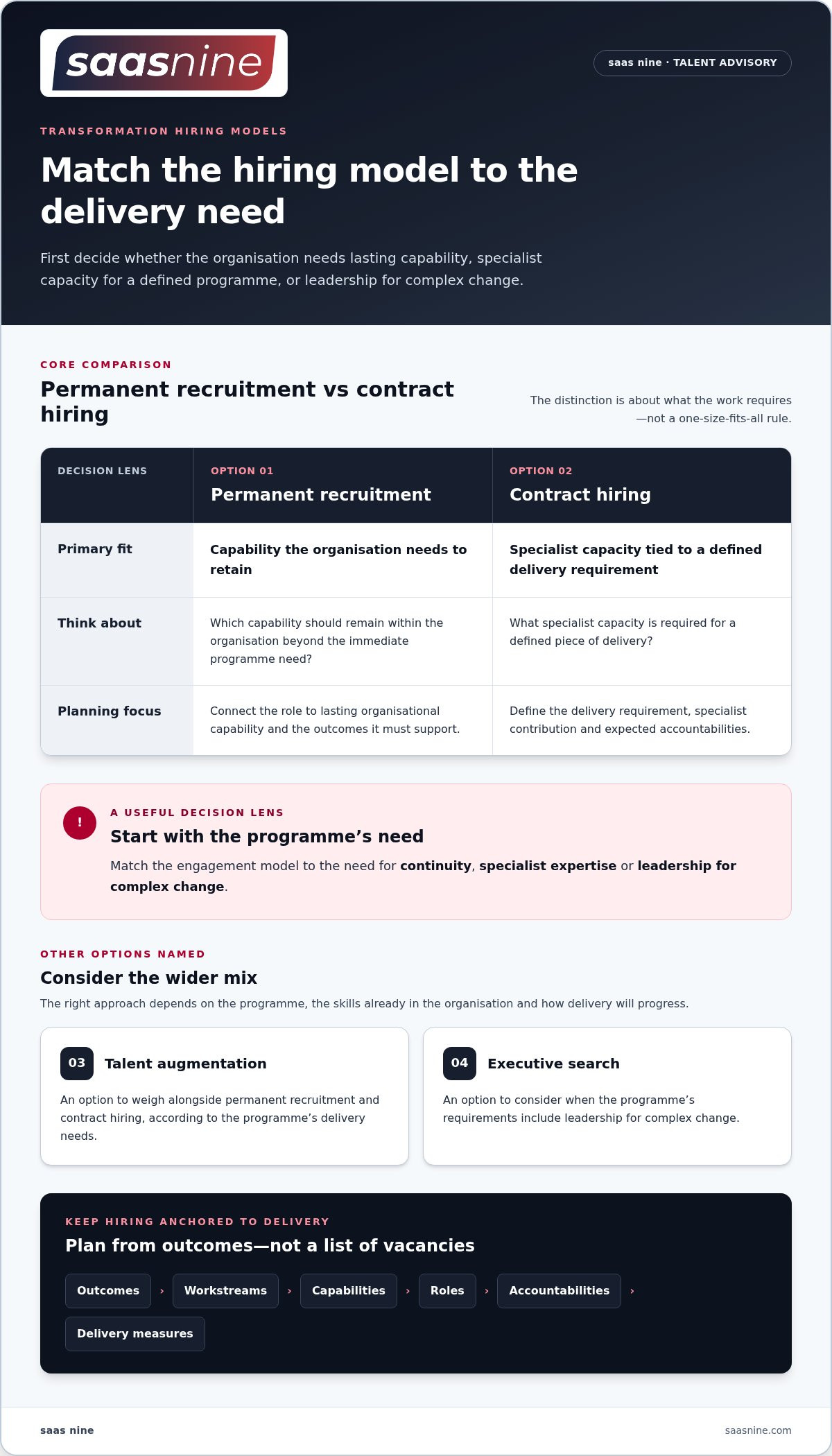
The right hiring model depends on whether you’re building lasting organisational capability, meeting a defined programme need or securing leadership for complex change. A useful distinction is: hire permanently for capability the organisation needs to retain; use contract talent for specialist capacity tied to a defined delivery requirement. In digital transformation recruitment australia, matching the engagement to the work can support delivery without treating every capability gap as a permanent vacancy.
When to hire permanently, contractually or as a team
Permanent recruitment suits enduring needs, such as ongoing ownership of a Microsoft platform or continued development of internal data capability. Contract hiring can fit time-bound work, including a defined implementation phase or specialist input during a migration. Talent augmentation provides access to individual professionals or project teams, depending on the capability and delivery structure required. For executive search, consider whether the programme needs a senior leader to set direction, establish governance or align stakeholders through change.
These models can complement each other. An organisation might retain a permanent programme owner while engaging contract specialists for a specific delivery phase. The decision should reflect expected duration, the need for continuity, existing internal capability and who will hold accountability after the work concludes.
Plan workforce capability beyond the immediate vacancy
Before finalising a brief, use market intelligence to test whether its responsibilities, experience requirements and scope align with available talent. If a role combines several specialist disciplines, revise it into realistic, complementary positions or adjust the delivery model. This helps leaders make informed trade-offs on priorities, timing and capability rather than relying on an idealised candidate profile.
Look beyond immediate mobilisation, too. Identify which skills the organisation will need to retain, where temporary expertise can address a defined gap, and how responsibilities may change as the programme progresses. That workforce plan can guide future hiring and organisational design. saas nine supports permanent and contract recruitment alongside talent augmentation and executive search. Discuss your transformation hiring needs to explore an approach aligned with your delivery priorities.
How saas nine connects recruitment, advisory and transformation delivery
Recruitment is more effective when it’s connected to the decisions that shape the programme: the business outcome, technology direction and capability the organisation needs to deliver. saas nine brings these considerations together through recruitment partnership and strategic advisory, supporting workforce planning, role design and organisational capability as transformation priorities evolve.
Its Agentic Workforce Platform supports AI-driven capability discovery and workforce insights. This can help inform conversations about existing strengths and potential gaps, alongside the judgement and context needed to make workforce decisions. The Talent Portal supports recruitment workflows, candidate matching, and visibility and engagement for clients and candidates.
Turn capability needs into a tailored engagement
Start with the delivery requirement, then shape the engagement around it. An enduring capability need may call for permanent recruitment; a defined specialist requirement may suit contract hiring. Executive search can support senior appointments, while talent augmentation can provide an individual specialist or project team. Clear role definition and market intelligence help align requirements with available talent, and can reveal where a brief needs refining before the search begins.
This joined-up approach helps leaders consider more than the immediate vacancy. It connects the capability required now with the organisation’s broader workforce plan, so hiring decisions can reflect both programme demands and longer-term priorities. That is the practical value of digital transformation recruitment australia: matching talent choices to the work the organisation needs to deliver.
Start with the transformation outcome
Bring the intended outcome, known capability gaps and delivery constraints into the conversation. These details give saas nine a practical basis for advising on role design and a suitable recruitment or talent augmentation approach, rather than beginning with a generic job brief. The next step can be a focused discussion about the capability your programme needs to progress.
Our Insight, Your Journey.
Make your next capability decision count
Before opening another vacancy, consider what the next stage of transformation will demand from your organisation. Which capabilities must remain in-house? Where could targeted external expertise help move a defined piece of work forward? What leadership or workforce planning decisions need attention before delivery can progress? Clear answers can turn digital transformation recruitment australia into a more deliberate investment in long-term organisational capability.
saas nine supports Australian organisations with permanent and contract hiring, individual specialists or project teams, and recruitment informed by workforce planning and strategic advisory. The right starting point might be a role that needs refining, a capability gap that affects delivery, or a team structure that must evolve with the programme. You don’t need every detail resolved before taking that step.
Discuss your transformation capability needs with saas nine, and explore the priorities shaping your next move. With a clearer view of the capability required, your organisation can build a more confident path from transformation ambition to delivery. Our Insight, Your Journey.
Frequently Asked Questions
What does digital transformation recruitment involve?
It involves assessing candidates against the real demands of the work, not just matching keywords in a CV. For digital transformation recruitment australia, clarify what evidence will demonstrate a person’s fit: relevant platform experience, examples of resolving comparable delivery challenges, or the ability to communicate with business stakeholders. Agreeing on these criteria before interviews helps decision-makers assess candidates consistently.
How do you identify the right roles for a digital transformation programme?
Check that each role has a clear interface with the teams it depends on. For example, specify how a functional specialist should raise a process issue that affects configuration, and who makes the final decision. Use these practical scenarios to test whether accountabilities are understandable to candidates and hiring managers alike. This can expose ambiguities that a polished position description might otherwise conceal.
Should a digital transformation team use permanent or contract professionals?
Consider the organisation’s capacity to onboard and support the person, not only the expected duration of the work. A specialist engaged for a discrete assignment still needs access to decision-makers, systems and subject matter experts to contribute effectively. Before choosing an arrangement, identify who will set priorities, review progress and manage any change in scope, so the engagement fits how the programme will operate.
What roles are commonly needed for Microsoft digital transformation?
Role requirements depend on the decisions and outputs a programme must produce. For an AI initiative, for example, clarify whether the immediate need is to assess use cases, design technical components, or establish how the organisation will oversee the solution. Those distinctions can point to different specialist profiles. Define the expected contribution and the evidence of relevant experience before settling on a title.
Can a recruitment partner help with workforce planning as well as hiring?
Yes. Workforce planning can help leaders examine how capability needs may shift between programme stages and what that means for future resourcing decisions. A useful planning discussion can identify dependencies, upcoming decision points and capability that may be needed after an initial phase concludes. saas nine can bring recruitment and advisory perspectives to that assessment, helping executives consider workforce choices in the context of organisational priorities.