

The strongest Azure data hire isn’t necessarily the candidate with the longest list of platform skills. It’s the architect whose design decisions connect business priorities with a data environment the organisation can deliver and maintain. For Australian organisations, Azure data architect recruitment australia starts with defining those outcomes, rather than searching by title alone.
It’s a familiar challenge: role descriptions can blur data architecture, engineering and broader Azure responsibilities, making it difficult to assess both strategic thinking and hands-on delivery. A search that starts with an unclear brief can slow data modernisation before the right work has even begun.
This guide will help you shape a role around business needs, assess relevant Azure and data architecture experience, and choose between permanent, contract or team-based hiring to suit delivery priorities. saas nine brings market intelligence and Microsoft ecosystem expertise to role definition and talent advice, helping organisations build a clearer path from transformation goals to the capabilities needed to deliver them.
Key Takeaways
- Start Azure data architect recruitment australia by defining the business problem and the platform outcomes the role must support.
- Separate essential Azure Architecture, Data Architecture, Data Engineering and Data Governance capabilities from useful adjacent experience.
- Use a consistent assessment process and a realistic architecture scenario to explore technical trade-offs, governance and stakeholder communication.
- Match the hiring model to the delivery need: ongoing capability, a time-bound programme or a gap within an existing team.
Why Azure data architect recruitment in Australia starts with the business problem
A job title can sound precise while leaving the actual hiring need unclear. One organisation may need direction for a data platform modernisation; another may need to make information from existing systems more trustworthy and useful for analytics. Start by naming the business outcome, then define the role around the decisions and delivery it must support.
An Azure data architect sets the direction and design for a data platform, making fit-for-purpose choices that align with business requirements, existing technology and delivery constraints. The role draws on wider principles of cloud computing architecture, but focuses on how data is structured, governed, moved and made available for use. For Azure data architect recruitment australia, a clear distinction between architecture and implementation helps prevent one position description from combining unrelated expectations.
What should an Azure data architect be accountable for?
Define accountability around architecture decisions, reusable patterns and alignment with business needs, rather than a broad promise to “own data”. The architect establishes the design guardrails and works with data engineers, analysts and technology leaders to make them practical. Engineers typically focus more heavily on implementing pipelines and platform components; the architect shapes how those pieces fit together and whether the overall design serves its purpose.
- Architecture: set platform direction and design patterns.
- Delivery alignment: help engineering teams apply the design.
- Business fit: connect platform choices to trusted data and usable analytics.
Why does role clarity matter to Australian hiring teams?
A defined remit gives hiring teams a consistent basis for comparing candidates across a national search, even when titles and past job descriptions vary. It also helps separate essential experience from adjacent skills. A broader talent search is more focused when the brief spells out the outcomes, decision authority and delivery boundaries. A well-defined remit turns candidate assessment from title-matching into evidence of the capabilities the programme actually needs.
Which Azure data architecture capabilities should your Australian role require?
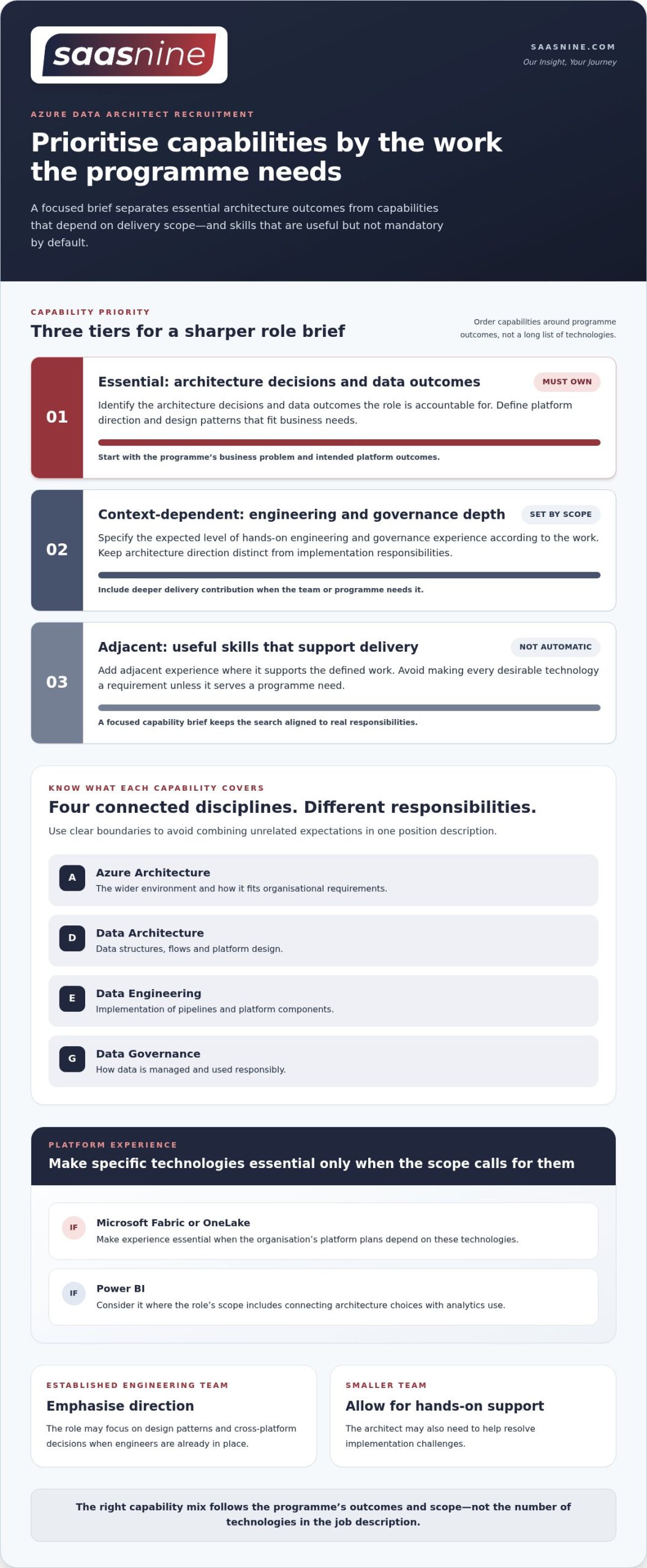
Build the capability profile from the programme’s scope, not a wish list of every Azure skill. The right mix depends on the outcomes and boundaries of the work: a platform redesign calls for strong architecture judgement, while a delivery bottleneck may demand deeper engineering contribution. For Azure data architect recruitment australia, distinguish essential capabilities from adjacent experience so candidates can be assessed against the real brief.
These disciplines connect, but they are not interchangeable. Azure Architecture covers the wider environment and its fit with organisational requirements; Data Architecture focuses on data structures, flows and platform design. Data Engineering turns designs into working pipelines and components, while Data Governance establishes how data is managed and used responsibly. IBM’s cloud architecture definition provides broader context for how architectural components combine to meet business needs.
- Essential: identify the architecture decisions and data outcomes the role must own.
- Context-dependent: set the expected level of hands-on engineering and governance experience.
- Adjacent: include skills that support delivery, without making them mandatory by default.
How should you balance architecture and hands-on delivery?
State whether the architect will set direction, contribute directly to implementation or balance both. For example, a team with established engineers may need someone focused on design patterns and cross-platform decisions; a smaller team may require the architect to help resolve implementation challenges. Avoid turning every desirable technology into a requirement unless it serves a defined programme need.
When should Microsoft Fabric or OneLake experience matter?
Make Fabric or OneLake experience essential when the organisation’s platform plans depend on them, rather than treating them as universal credentials. Power BI experience may also matter where the role’s scope includes connecting architecture choices with analytics use. Clear boundaries between platform direction, engineering and reporting responsibilities help define Microsoft Fabric roles and responsibilities and keep the capability brief focused.
The right capability mix depends on the programme’s outcomes and scope, not on how many technologies fit into the job description.
How can you assess Azure data architect candidates without relying on titles?
Assess evidence against the role’s actual remit, not the wording of a previous job title. A consistent process helps hiring teams compare how candidates think, make decisions and work with delivery teams. In Azure data architect recruitment australia, that means testing architecture judgement alongside the practical capability the programme needs.
- Agree outcomes: define what the data programme needs to achieve.
- Define scope: clarify the decisions and delivery responsibilities assigned to the role.
- Set evidence criteria: identify relevant examples, technical reasoning and stakeholder skills.
- Assess consistently: use the same core questions and scenario for each candidate.
Use a realistic scenario drawn from your environment. For example, ask how the candidate would approach bringing data from separate business systems into an analytics platform. Invite them to explain trade-offs around data quality, access and governance, how they would work with engineering and analytics teams, and how they’d communicate implications to business stakeholders. Look for a reasoned approach, not a single “correct” design.
What evidence demonstrates practical architecture judgement?
Ask candidates to describe a project where they translated business requirements into architecture decisions. What options did they consider, why did they choose a particular approach, and what consequences did they explain to stakeholders? Explore how they partnered with engineers and analysts through design and delivery, including how they adapted when requirements or constraints changed.
How do you distinguish an architect from a data engineer?
Use the proposed role as your reference point. An architect may set patterns across data flows and guide design decisions; an engineer may focus on building and refining pipelines. Some roles combine both, so assess the expected balance directly. A structured approach to vetting cloud architects can help keep evidence relevant to the remit.
Don’t treat years of experience or certifications as substitutes for demonstrated capability. For a consistent assessment aligned to your hiring needs, talk with saas nine about defining the assessment brief.
How should you structure Azure data architect recruitment in Australia?
Choose the engagement model by asking what capability the programme needs, for how long and where the current team has a gap. A permanent appointment can build ongoing organisational knowledge and guide a continuing data roadmap. Contract hiring may suit a defined programme or a specific period of delivery. Talent augmentation can add an individual specialist or a project team alongside existing staff, depending on the work to be delivered.
When could permanent, contract or team-based capability fit?
Use these distinctions to frame the decision:
- Permanent: ongoing responsibility for architecture direction, standards and organisational capability.
- Contract: a focused contribution to a time-bound transformation, platform design or delivery requirement.
- Talent augmentation: specialist capacity or a team to address a skills gap within a broader programme.
The models can also complement each other. A permanent architect might set long-term direction while contract specialists support a defined delivery phase. Avoid writing one overloaded position description to cover strategy, architecture, engineering and analytics if the work is better divided across a team.
Before opening the search, compare the proposed responsibilities with the delivery plan and available talent. Market intelligence can inform realistic role scope, while unbundling a broad brief helps distinguish essential accountabilities from work better owned by engineers or other specialists. This gives Azure data architect recruitment australia a practical foundation: an engagement model and role that fit the work, not just the preferred title.
How can a recruitment partner support the whole hiring journey?
saas nine works as a recruitment partner and talent adviser, connecting business priorities with role definition, market insight and candidate matching across Microsoft capabilities. Its Talent Portal supports recruitment workflows and candidate visibility. This joined-up approach can help organisations shape permanent, contract or team-based hiring around programme needs.
If you’re ready to refine the brief or discuss the right engagement model, discuss your Azure data architect requirements with saas nine.
Turn your data priorities into a hiring brief
Before opening a search, connect the next stage of your data roadmap to the capability your organisation can realistically support. Identify the decisions that need clear ownership, where the current team needs reinforcement and how success will be recognised. This gives leaders and hiring teams a shared basis for action, even if programme priorities shift.
A considered approach to Azure data architect recruitment australia is also an opportunity to shape capability for the longer term, rather than filling a vacancy in isolation. saas nine can help bring business priorities, Microsoft ecosystem expertise and workforce planning into the same conversation, using market insight to inform role definition and hiring decisions.
Whether you’re clarifying the brief or weighing up a permanent or contract pathway, take the next step with a focused discussion. Explore your Azure data architect hiring needs with saas nine and set a clear direction for the capability your organisation needs to move forward.
Frequently Asked Questions
What does an Azure data architect do?
An Azure data architect helps shape the organisation’s data environment around its business and technical needs. In practice, the role may produce a target-state view, document key design decisions and identify dependencies that affect delivery sequencing. For Azure data architect recruitment australia, clarify which outputs the organisation expects, such as architecture principles, decision records or a roadmap, so candidates understand how their work will be used.
Should we hire an Azure data architect or a data engineer?
Choose the role that closes the most consequential gap in the delivery plan. Map the upcoming work to accountable owners, including design approvals, data movement, platform operations and analytics enablement. If critical responsibilities have no clear owner, consider whether one role can reasonably cover them or whether complementary specialists are needed. This task-based view can make the hiring decision clearer than comparing job titles.
Is Microsoft Fabric experience essential for an Azure data architect?
No, not by default. If Fabric is relevant, specify the level of experience you need: familiarity with the environment, contribution to a design, or responsibility for shaping an operating approach. Distinguish direct project experience from general knowledge, and consider how candidates explain lessons from previous work. That detail helps hiring teams evaluate the depth of experience without treating a product name as a substitute for capability.
Can we hire an Azure data architect on a contract basis in Australia?
Yes. For a contract engagement, make the assignment practical to scope by setting out its outputs, decision authority and handover expectations. For example, a brief could define an architecture review, documented recommendations and a transition session with the internal team. Clear boundaries help the organisation understand what the engagement needs to deliver and how its work will connect with existing programme responsibilities.
How do we assess an Azure data architect during interviews?
Ask candidates to make their thinking visible, not just describe successful outcomes. Invite them to walk through a relevant design artefact, explain its assumptions and show how they recorded decisions or managed dependencies. Follow up on what changed after the design was put into practice. This can reveal how carefully they reason, communicate uncertainty and turn technical choices into information others can act on.