

What if the hardest part of Microsoft Fabric Recruitment isn’t finding people who know the platform, but defining the capability your programme needs? Fabric delivery can require distinct architecture, engineering, analytics and governance skills, while position descriptions often bundle them into one oversized brief. Hiring by platform keywords alone can overlook whether a candidate has delivered the work your roadmap depends on.
Start with the outcomes, not a generic list of Fabric tools. This article explains how to turn programme goals into clearly scoped roles, assess relevant delivery experience and choose permanent or contract hiring to suit your delivery stage and capability gaps.
We’ll look at how architecture, data engineering, analytics and leadership responsibilities fit together, and how workforce planning can connect hiring decisions to practical milestones. saas nine supports Australian organisations with role definition, market-informed sourcing and strategic workforce advice, helping build capability around business priorities rather than simply fill vacancies.
Key Takeaways
- Start Microsoft Fabric Recruitment with programme outcomes, then identify the capabilities needed to deliver them.
- Separate architecture, engineering and analytics responsibilities so each role has a clear scope and relevant delivery evidence.
- Build a hiring plan by mapping capability gaps, refining role requirements and matching the engagement model to delivery needs.
- Use market intelligence and workforce planning to connect Microsoft Fabric capability with business priorities.
Why Microsoft Fabric recruitment should begin with delivery outcomes
A Fabric initiative needs defined capabilities, not just a shopping list of platform keywords. Microsoft Fabric Recruitment means matching the work an organisation needs to deliver with roles and an engagement model that can support it. If a brief asks one person to own architecture, engineering, analytics and governance, it may blur distinct responsibilities and make relevant experience harder to assess.
Start by describing the intended contribution, then identify the skills and experience that fit. For a general platform overview, see Microsoft Fabric on Wikipedia. A hiring plan must go further by connecting the platform to the organisation’s delivery priorities.
Start with the work the organisation needs to deliver
Break the work into practical capability areas: platform foundations, data movement, modelling, reporting and governance. Then define the delivery stage. Discovery may call for architecture and planning; implementation can require engineering and analytics skills; modernisation or ongoing operations may need a different combination of specialist and leadership capability.
Clear role boundaries make it easier to align delivery capability with the work, skills and accountability the programme requires.
Distinguish hiring demand from a generic vacancy
Before drafting a position description, describe the business outcome, delivery context and expected contribution. For example, specify whether the role will shape architecture, build data pipelines, establish governance practices or turn prepared data into reporting. This gives candidates a clearer picture of the work and helps you assess relevant delivery evidence instead of matching CVs to a broad list of Fabric terms.
saas nine helps organisations define roles before sourcing and supports permanent or contract hiring to suit capability needs. Explore Microsoft Fabric recruitment support when shaping a role or team around your delivery priorities.
Which Microsoft Fabric roles does your programme actually need?
Build the team around responsibilities, not job titles alone. A useful starting point is to distinguish who sets direction, who delivers the data foundations and who connects the outputs with business decisions.
| Role | Primary responsibility |
|---|---|
| Fabric Architect | Shapes platform and data design decisions around organisational requirements, integration needs and governance. |
| Data Engineer | Implements and maintains data pipelines and platform components that support the agreed design. |
| Analytics Lead | Connects data outputs with reporting priorities, stakeholder needs and practical business use. |
Separate architecture, engineering and analytics responsibilities
Architecture sets the design direction, engineering delivers and maintains the data foundations, and analytics helps people use the outputs. These responsibilities depend on one another, but they aren’t interchangeable. A programme establishing its platform foundations may need clear architecture ownership. One focused on pipeline delivery needs engineering capacity, while a reporting-led initiative may need analytics leadership to shape how information supports business decisions.
Role titles vary between organisations, so assess candidates against responsibilities, relevant delivery experience and programme context. Microsoft Fabric Recruitment shouldn’t become a checklist of product terms. Evidence of designing a data environment, building pipelines or guiding reporting can be more informative than a title match alone.
Core roles may need complementary expertise. A Data Architect can support broader data design; a Data Governance specialist can help define governance responsibilities; and a Power BI Consultant can contribute focused reporting and visualisation capability. Whether these are dedicated positions or responsibilities within a wider team depends on the work and existing skills.
Use role descriptions as capability references, not fixed templates. saas nine helps Australian organisations define Fabric roles and align them with wider Data & Analytics needs. Explore Microsoft Fabric recruitment support to shape the capability your programme requires.
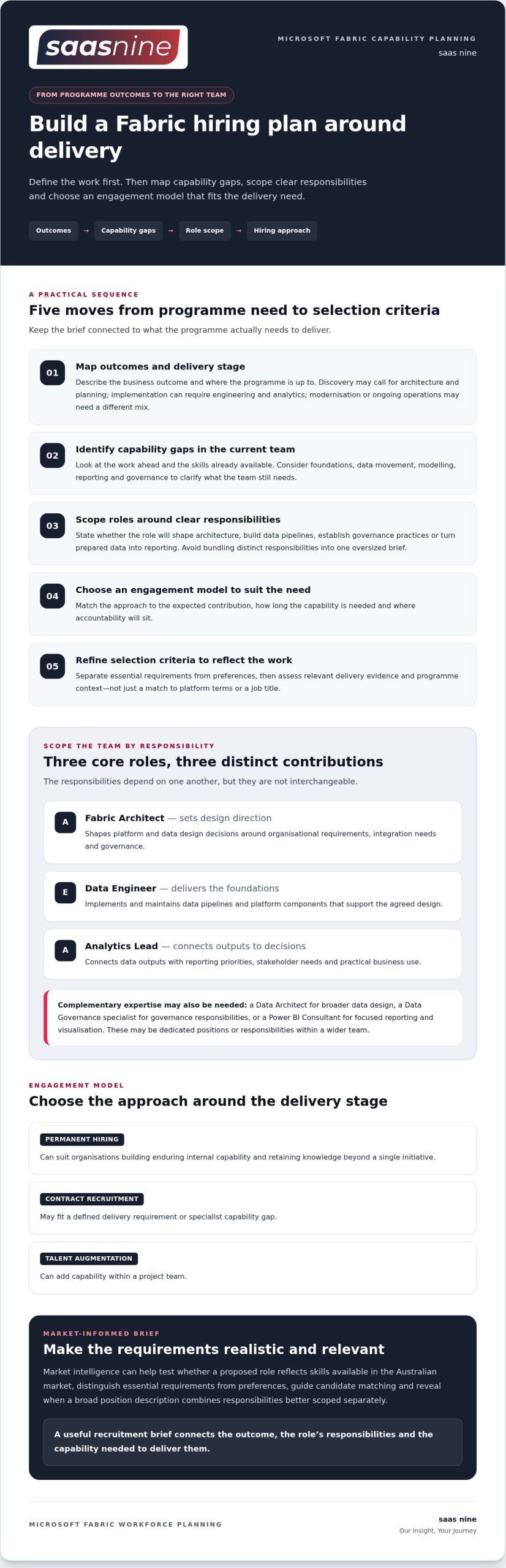
How to shape a Microsoft Fabric hiring plan that fits delivery
Turn programme priorities into a hiring plan before opening a vacancy. This sequence keeps the focus on capability rather than a generic list of platform skills:
- Map the outcomes and delivery stage.
- Identify capability gaps in the current team.
- Scope roles around clear responsibilities.
- Choose a permanent, contract or Talent Augmentation approach.
- Refine selection criteria to reflect the work.
A useful recruitment brief connects the outcome, the role’s responsibilities and the capability needed to deliver them. Market intelligence can help test whether a proposed role reflects the skills available in the Australian market, separate essential requirements from preferences and guide candidate matching. It can also show when a broad position description combines responsibilities that are better scoped separately.
Choose an engagement model around the delivery stage
Permanent hiring can suit organisations building enduring internal capability and retaining knowledge beyond a single initiative. Contract recruitment may fit a defined delivery requirement or specialist gap, while Talent Augmentation can add capability within a project team. Consider the expected contribution, how long the capability is needed and where accountability will sit. Choose the model that fits the delivery plan, rather than relying on a general preference for one type of hire.
Make selection evidence relevant to the role
Assess candidates against the responsibilities in the brief. For an architecture role, explore how they have shaped platform and data design decisions. For engineering, examine relevant pipeline delivery and maintenance experience. For analytics, consider how they have connected data outputs with reporting and business use. Structure technical assessment around the actual work, and include communication and stakeholder skills where the role requires them.
saas nine uses market intelligence to inform role definition and candidate matching, helping organisations connect Microsoft Fabric Recruitment with practical workforce needs. A clear plan gives hiring teams a shared basis for evaluating fit and adapting the brief as delivery priorities develop.
How saas nine connects Microsoft Fabric talent with transformation delivery
Microsoft Fabric recruitment is most useful when it supports a wider delivery plan, rather than treating each vacancy as a standalone task. saas nine works with Australian organisations to define positions, unbundle broad descriptions and shape teams around the capability a transformation requires. This connects Fabric architecture, data engineering, governance and analytics needs with existing skills and business priorities.
Bring strategy, technology and workforce capability together
Recruitment decisions can sit alongside workforce planning and capability strategy. For example, an organisation may need a Fabric specialist while also deciding how data architecture, governance and analytics responsibilities fit across the wider team. saas nine’s Strategic Advisory connects business direction, technology capability and workforce design. Where the requirement extends beyond Fabric, explore Data and AI recruitment support.
The Talent Portal supports candidate matching, workflow automation, visibility and engagement for clients and candidates. It complements advisory and sourcing by supporting discovery and communication, while role requirements and relevant delivery experience remain central to candidate assessment.
Make the next recruitment conversation practical
Prepare a concise view of programme outcomes, the capability already available in your team and the responsibilities that need ownership. Note whether the gap is enduring, tied to a defined delivery need or part of a broader project team requirement. These details help clarify the role scope and suitable engagement model.
saas nine works with organisations to connect Microsoft Fabric capability with transformation priorities and workforce plans. Discuss your capability requirements and the engagement model that best fits the work.
Build your Fabric capability around the work ahead
Strong Microsoft Fabric Recruitment starts with delivery priorities. Define the outcomes first, then scope architecture, engineering, governance and analytics responsibilities so each role has a clear purpose. Match the hiring model to the capability need, whether you’re building lasting internal expertise or adding support for defined delivery requirements.
saas nine supports Australian organisations across Fabric roles, including Fabric Architects, Data Architects, Data Engineers, Analytics Leads and Power BI Consultants. Permanent and contract recruitment, Talent Augmentation and Strategic Advisory support different workforce requirements. The Talent Portal supports capability discovery, candidate matching and workforce visibility as part of a considered recruitment approach.
Bring your programme outcomes, current team capability and priority responsibilities into the conversation. Discuss your Microsoft Fabric hiring needs with saas nine and explore an approach aligned with your delivery plans. With clear role definition and a considered hiring model, you can take the next step towards a team equipped for the work ahead.
Frequently Asked Questions
What roles are commonly needed for a Microsoft Fabric programme?
Common roles include a Fabric Architect, Data Engineer and Analytics Lead, with the team shaped by the work ahead. A Data Architect can contribute broader data design, while a Data Governance specialist can focus on governance needs and a Power BI Consultant can support reporting. Some programmes need only a subset of these capabilities. Define responsibilities against the delivery scope before deciding which positions to recruit.
Should we hire a Microsoft Fabric specialist permanently or on contract?
Choose permanent recruitment for capability your organisation needs to retain and develop over the longer term. Contract recruitment can suit a defined specialist requirement or delivery need, while Talent Augmentation can add individual expertise or project team capability. Consider how the role fits your programme, where knowledge needs to sit after delivery and whether the skill gap is ongoing or tied to specific work.
How do we write a Microsoft Fabric job description?
Start with the business outcome, then set out the delivery context, role responsibilities and capability required. Specify whether the position will shape architecture, implement data pipelines, establish governance or enable reporting. Separate essential experience from preferred skills, and describe how the role will work with the existing team. This gives candidates a clearer understanding of the work and helps you assess relevant experience.
Can one person cover every Microsoft Fabric role?
One person may cover overlapping responsibilities in a tightly scoped programme, depending on their experience and the work required. However, architecture ownership, engineering delivery, governance and analytics involve distinct contributions. Combining them without clear priorities can make accountability and candidate assessment less precise. Map the work first, then decide whether one specialist can reasonably cover the scope or whether responsibilities should sit across several roles.
How can saas nine help with Microsoft Fabric recruitment?
saas nine helps Australian organisations define roles, source Microsoft Fabric professionals and align hiring with delivery and workforce needs. Microsoft Fabric Recruitment support can cover Fabric Architects, Data Architects, Data Engineers, Analytics Leads and Power BI Consultants, with permanent and contract recruitment, Talent Augmentation and Strategic Advisory. The Talent Portal supports candidate matching, workflow automation, visibility and engagement as part of the recruitment process.